
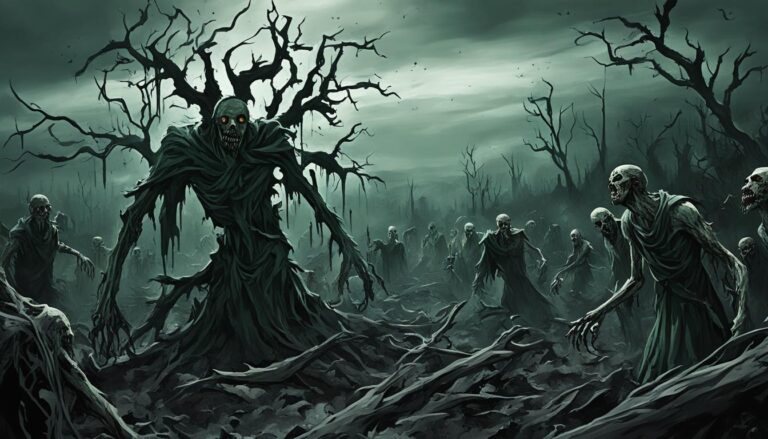
Dream About Zombies: Meaning and Symbolism
Quick answer
Dreaming about zombies almost always points to something in waking life that feels threatening but mindless — a habit, relationship, or social pressure that spreads, drains your energy, or pulls you toward conformity. The image is rarely about literal fear; it is your mind flagging overwhelm, emotional numbness, or a crowd you cannot escape.
Had a different dream? Describe it and get a reading.
Interpret my dream →Why this dream sticks
Zombie dreams linger because they combine two anxieties that rarely appear together: the threat feels both personal and collective. You are surrounded, but there is nothing to reason with. That combination — helplessness plus irrationality — is exactly how the brain encodes burnout, social pressure, addiction, or any dynamic where you feel you must go along with something that has lost its meaning.
The dream landscape matters too. Zombie dreams typically unfold in recognizable places — your office, your childhood home, a shopping mall — which is the mind’s shorthand for locating the problem. Pay attention to the setting before you focus on the zombies themselves.
Psychologically, zombies represent the shadow side of the group: people who have surrendered individual will to collective behavior. If you have been trying to interpret why this image keeps returning, the most useful question is not “what are zombies?” but “where in my life do I feel surrounded by mindless pressure, and what would happen if I stopped running?”
What the common variations mean
| Variation | What it tends to reflect |
|---|---|
| Being chased by zombies | Avoidance of a draining situation — a job, relationship, or habit you know is consuming you but have not confronted directly. |
| Becoming a zombie yourself | Fear of losing your sense of self; feeling that you are going through the motions without genuine engagement in daily life. |
| Fighting zombies successfully | Active processing of stress; your mind rehearsing resistance to pressure. Generally a constructive sign that you are not simply fleeing the issue. |
| A loved one turning into a zombie | Concern that someone close has changed in a way that feels unreachable — emotionally withdrawn, consumed by work, substances, or ideology. |
| Being the only survivor | Isolation within a group — feeling like the only person who sees a problem clearly, or social alienation that has begun to feel total. |
| Slow, shuffling zombies | Chronic, low-grade dread rather than acute crisis — something grinding and relentless. Often linked to long-term burnout. |
| Fast, aggressive zombies | Acute overwhelm or panic; a situation escalating faster than you can manage. |
| Hiding without being found | Coping by withdrawal or staying under the radar — useful short-term, but the dream may signal that strategy is reaching its limits. |
What this dream is not
A zombie dream is almost never a literal premonition. The vivid, cinematic quality is symbolic — your brain borrows from cultural memory (films, games, news) to dramatize an internal state, not to predict external events.
It is also not a sign of something wrong with you psychologically. Zombie dreams are common among people navigating high-pressure environments and are especially frequent during transitions: starting or leaving a job, ending a relationship, moving, or any moment when your sense of identity is in flux. Related themes like being-chased dreams and drowning dreams cluster with zombie dreams for the same reason — they are the mind’s library for “I feel overwhelmed and need to process that.”
This is not medical advice. If recurring nightmares are significantly disturbing your sleep, speaking with a sleep specialist or therapist is a worthwhile step.
A short practice
When you wake from a zombie dream, try this before the imagery fades:
- Write down the setting — not the plot, just where the dream took place.
- Identify who or what the zombies reminded you of in tone or behavior, even loosely.
- Ask yourself: “What in that area of my life feels like it is spreading, mindless, or pulling me toward something I do not actually want?”
- Write one sentence — not a solution, just a name for the thing. Naming it is often enough to reduce the dream’s recurrence.
This takes under five minutes. You are not analyzing symbols; you are using the image as a pointer back to waking life.
FAQ
Does dreaming about zombies mean I am depressed?
Not necessarily. Zombie dreams are common during burnout, social stress, or major life transitions — states distinct from clinical depression. The emotional tone matters more than the imagery. If the dream leaves you feeling resigned or hollow rather than frightened, and that tone matches how you feel during the day, it may be worth reflecting on your energy levels and sense of meaning. Speaking with a professional is advisable if those feelings are persistent. The dream alone is not a diagnosis.
Why do I keep having the same zombie dream repeatedly?
Recurring dreams typically signal an unresolved tension the mind keeps returning to because the underlying issue has not shifted. If your zombie dream repeats with the same setting and emotional outcome, look at what has stayed the same in that area of your life. The repetition usually stops when the real-world situation changes — or when your relationship to it does. The interpretation process is most useful here not as a one-time exercise but as a way to track what the dream is pointing to over time.
What does it mean if I am helping other survivors in the zombie dream?
This variation tends to reflect a caretaking or protective role you carry in waking life — someone who manages or shields others from a draining situation. It can reflect genuine strength, but it sometimes surfaces when that role has become exhausting or one-sided. Notice whether the other survivors help back, or whether you are doing all the work. That detail often maps directly onto a real dynamic worth examining.
Author

Before you read a fixed meaning, ask:
What happened — the central image or event, in one plain sentence.
How it happened — calm or violent, easy or forced, sudden or slow.
Who was watching — alone, one person, or a crowd.
Those three usually matter more than the symbol name alone.
Meanings reflect widely shared symbolism; your own context comes first.
Explore the next dream


Dreams are not medical, legal, or financial advice. The Dream Symbolist offers symbolic interpretation to support reflection, not diagnosis.